
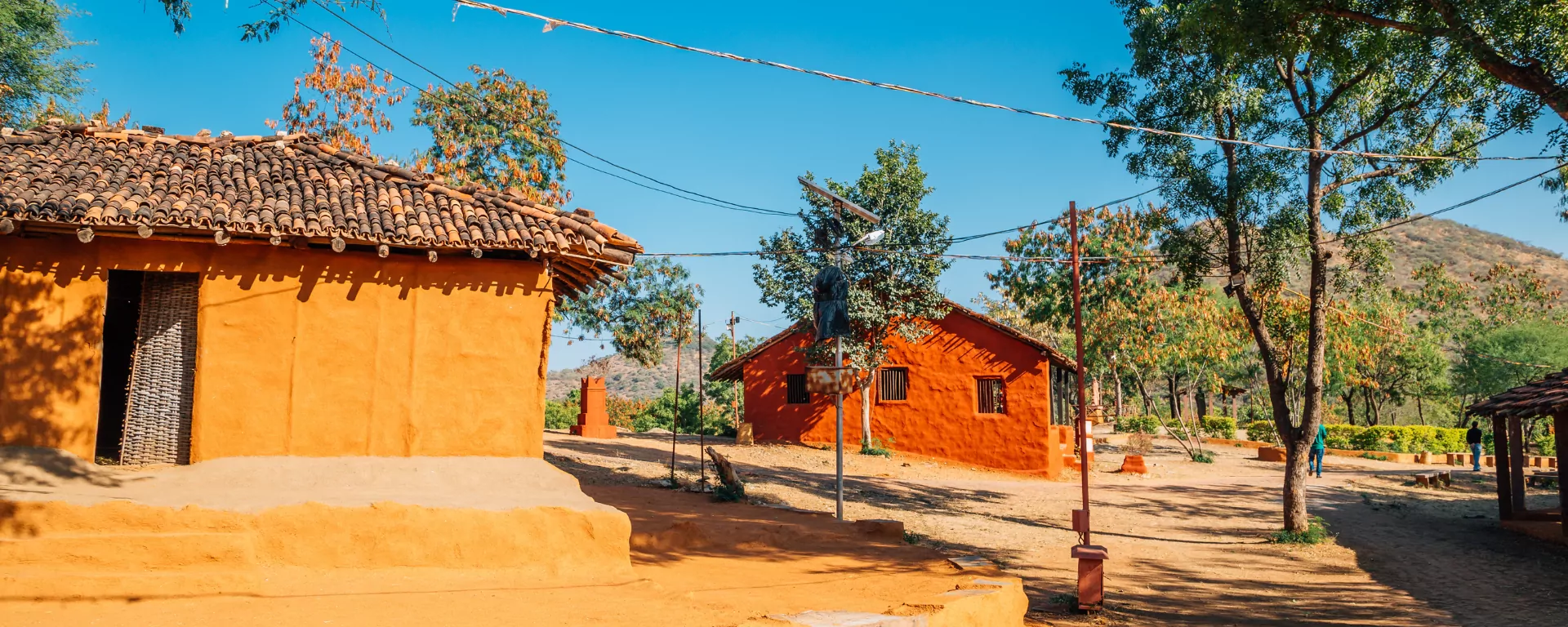
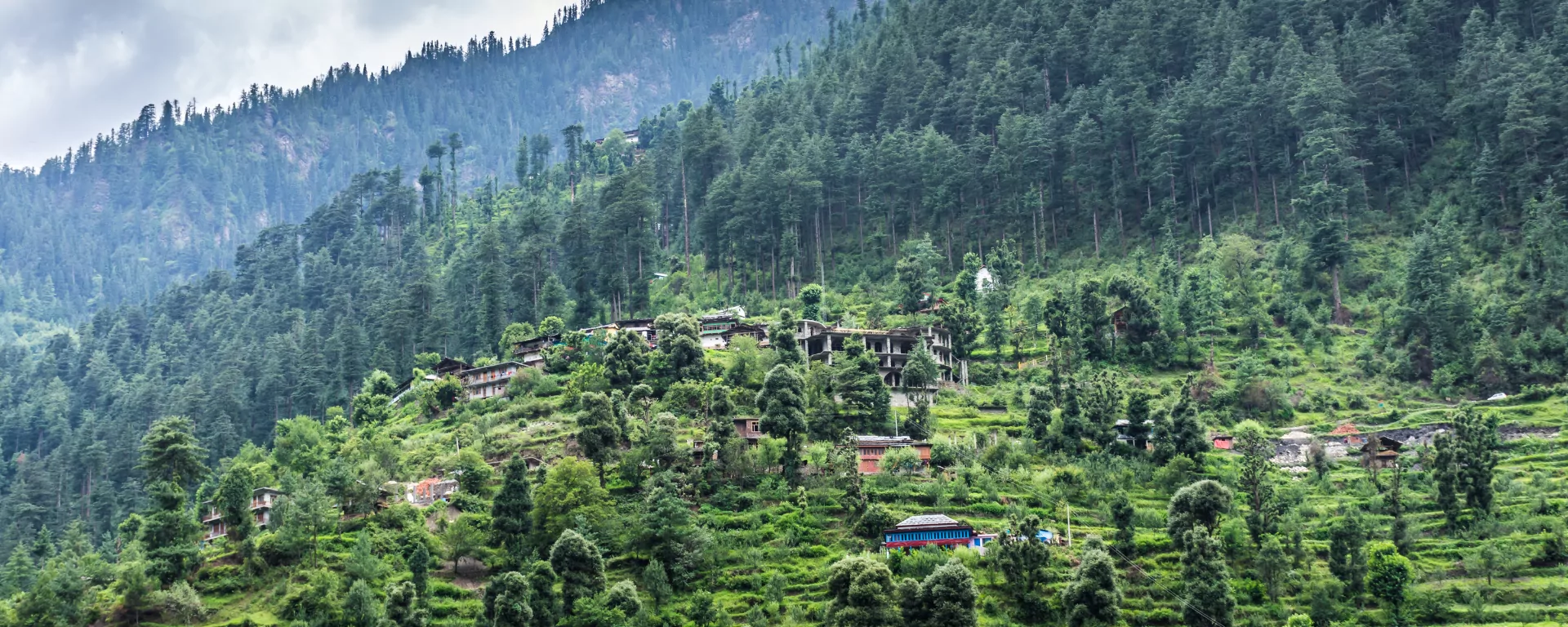
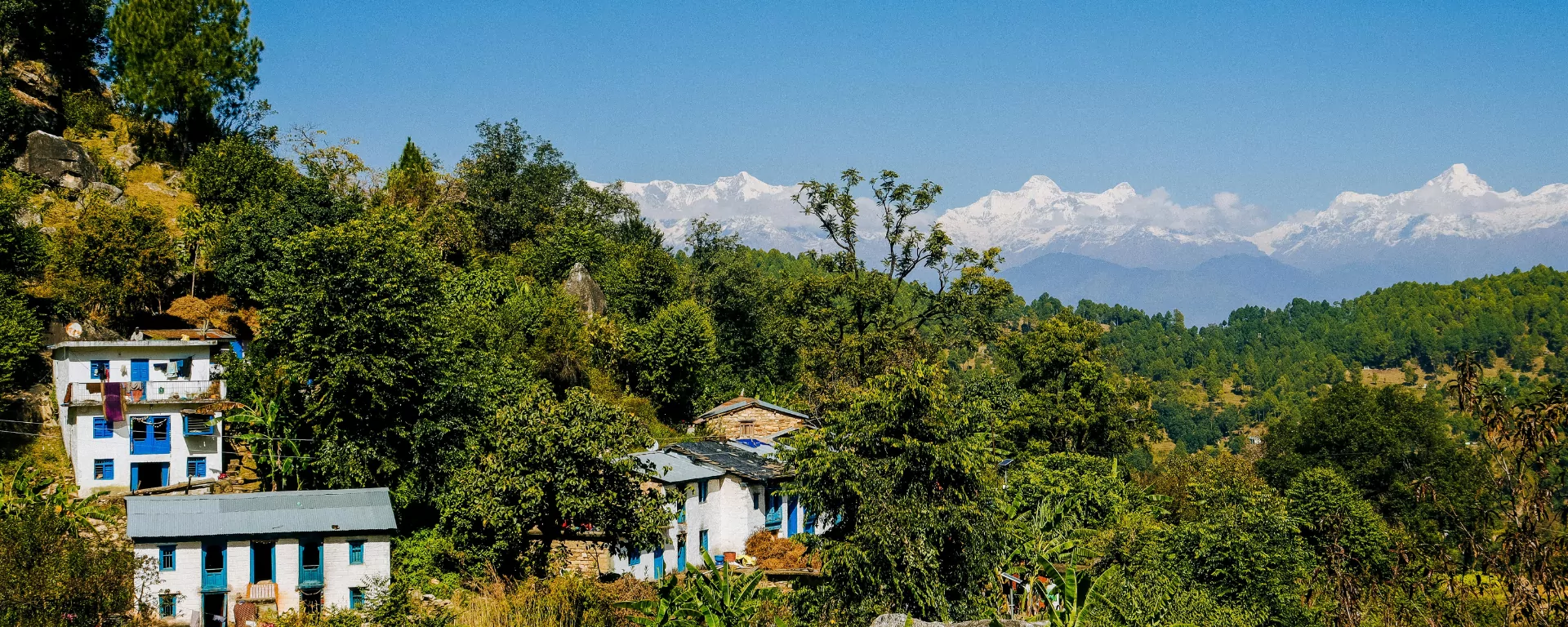
Guided walks through working pahadi villages in Uttarakhand. Stone houses with slate roofs, terraced fields, old temples, and farming communities that still run on the monsoon calendar.
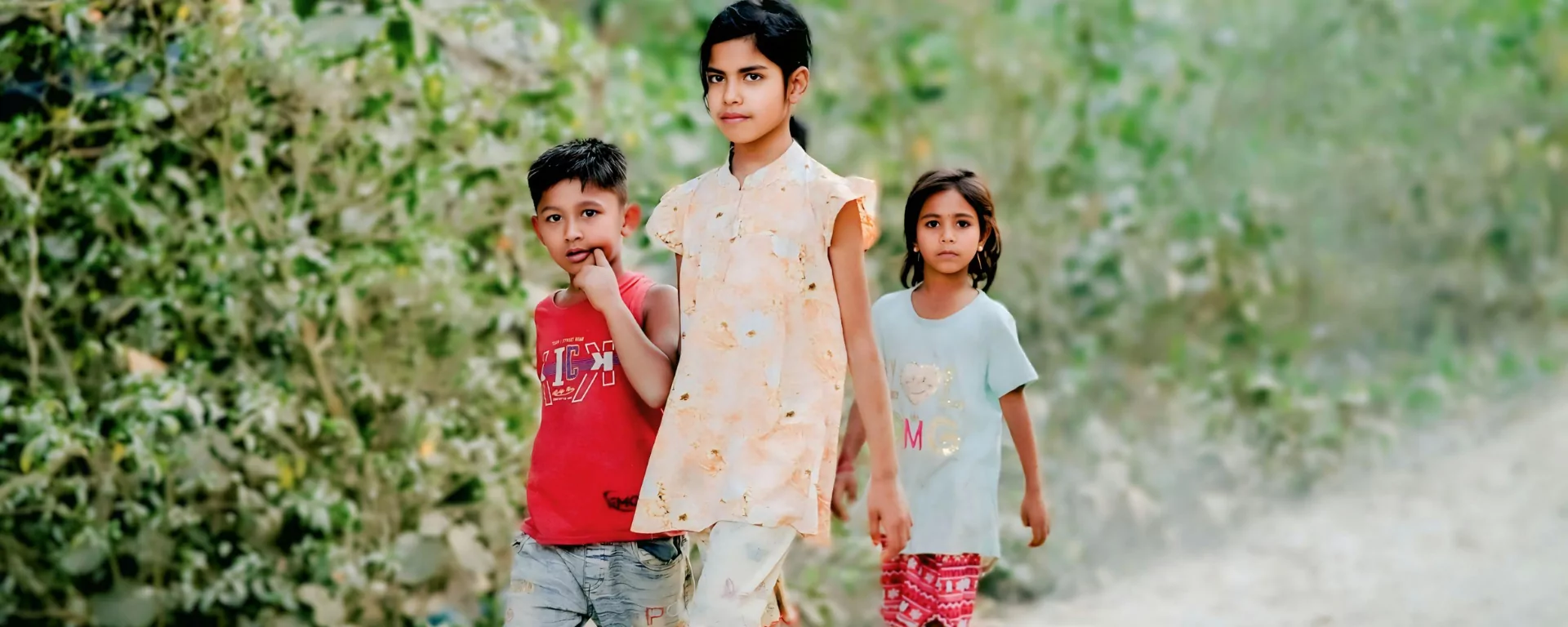
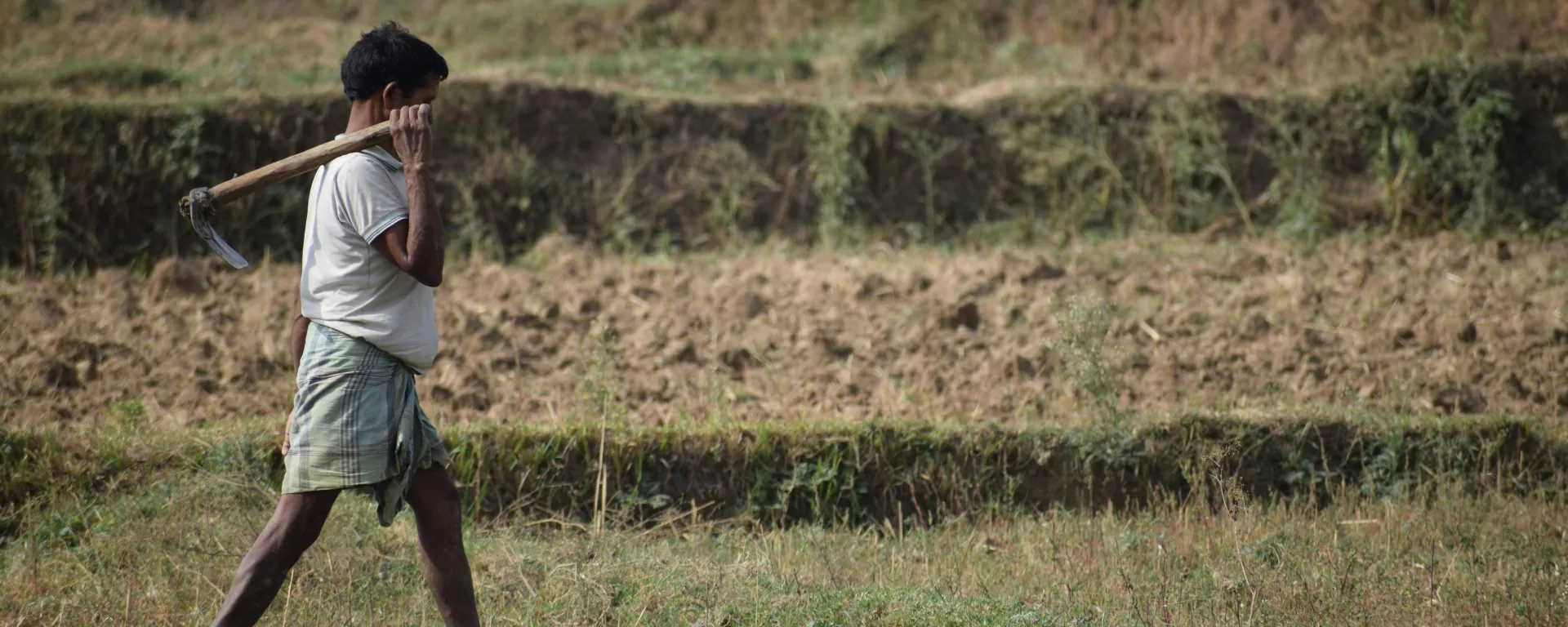
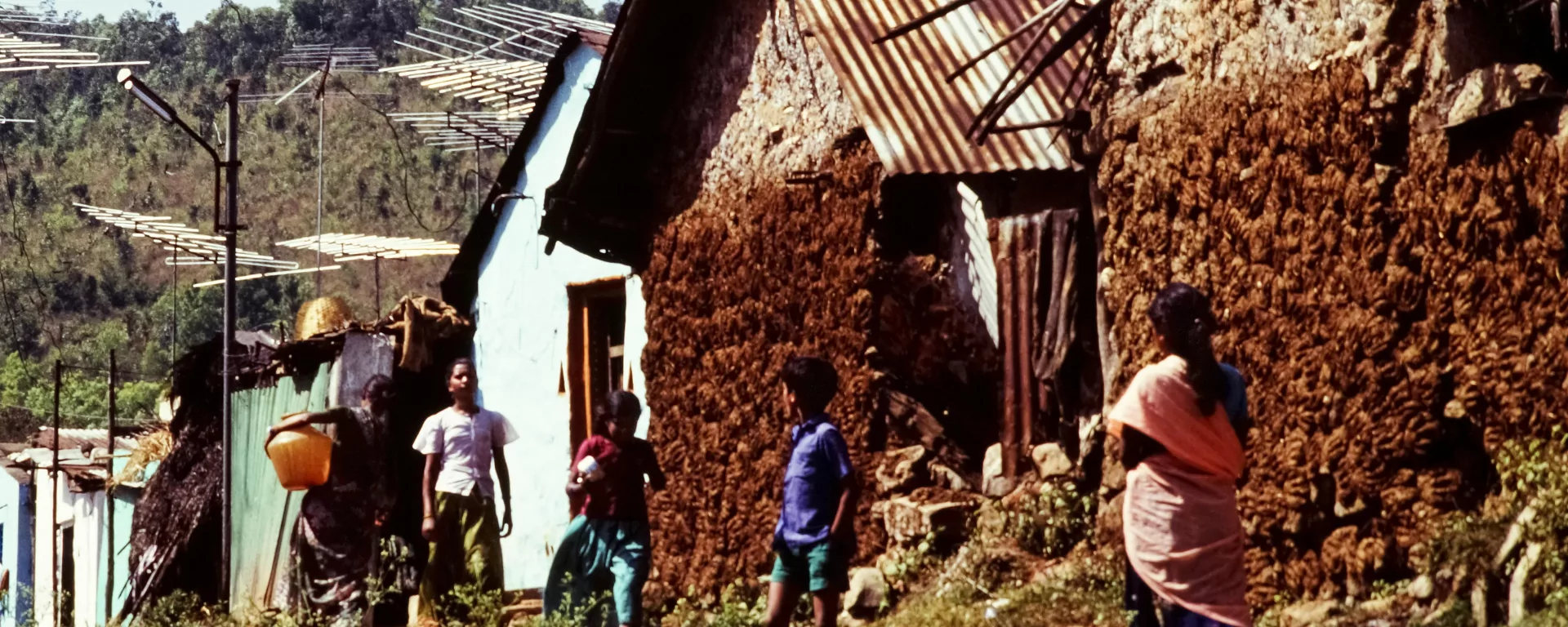
The walks are led by a local Garhwali-speaking guide who grew up in these valleys. You stop for chai at a host family’s home, see how a potter shapes a clay matka, and during harvest you can sit in on a wheat-threshing session. No staged “cultural tour”, no dance performance, no handicraft stall – just an honest walk through a living community.
Two ways to do this. Add a walk to a Pahadi House stay and we’ll head to Garhwali hamlets near Camp George Everest in Mussoorie or pahadi villages near Himalayan Ganga Retreat in Rishikesh. Or book it on its own if you’re staying elsewhere. Tell us where you’ll be and we’ll pick the route.
A village walk is one of the gentlest ways into slow living in Uttarakhand – the unhurried, local-first way to spend time in the hills.
We rotate between three hamlets so no single village bears the weight of visitors. Your guide will pick the best fit for the day.
A terraced farming hamlet 8 km downhill from Mussoorie. Famous for its apricots and old stone Shiva temple.
FarmingA cluster of 30 families on the Landour ridge. Known for traditional weaving and a community grain mill still powered by water.
ArtisanHigher up, towards Surkanda Devi. Big views, pine forest, and the oldest school in the region.
HighlandA rough timeline. Pace and route shift to suit you and the season.
20-30 minute drive to the trailhead. Pick-up from your Pahadi House stay or your hotel. Light breakfast on the way.
Easy downhill and flat sections along old pony tracks used for centuries by traders and pilgrims.
Chai at a host family’s courtyard. Time to chat through our guide, see the kitchen, meet whoever is around.
Pottery, weaving, apricot-picking, millet-grinding, or sitting in on a morning bhajan, depending on season.
Simple home-cooked Garhwali meal with a host family. Dal, rice, sabzi, chapati, fresh butter-milk, all grown or made on-site.
Shorter walk back to the vehicle, then drop at your stay or hotel.
Six things to expect:
Everything you need for a respectful day in the village.
Extras you can arrange on request.
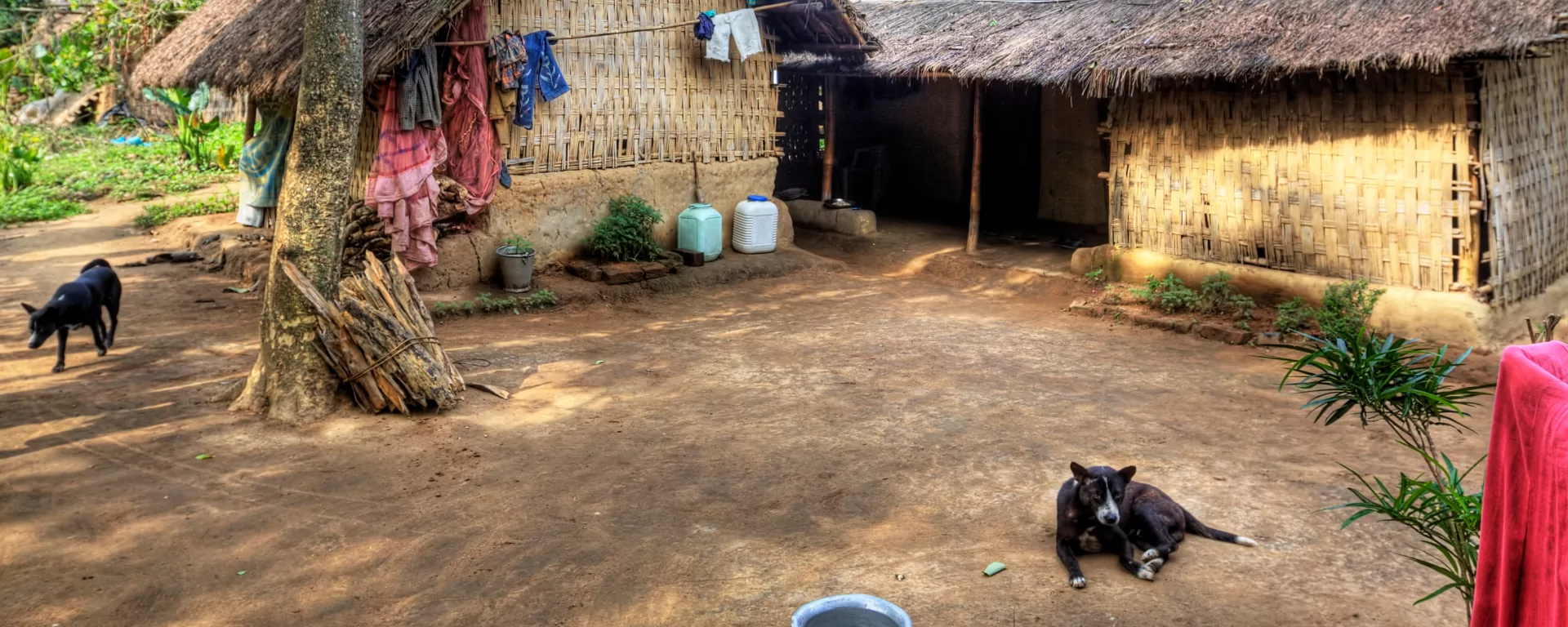
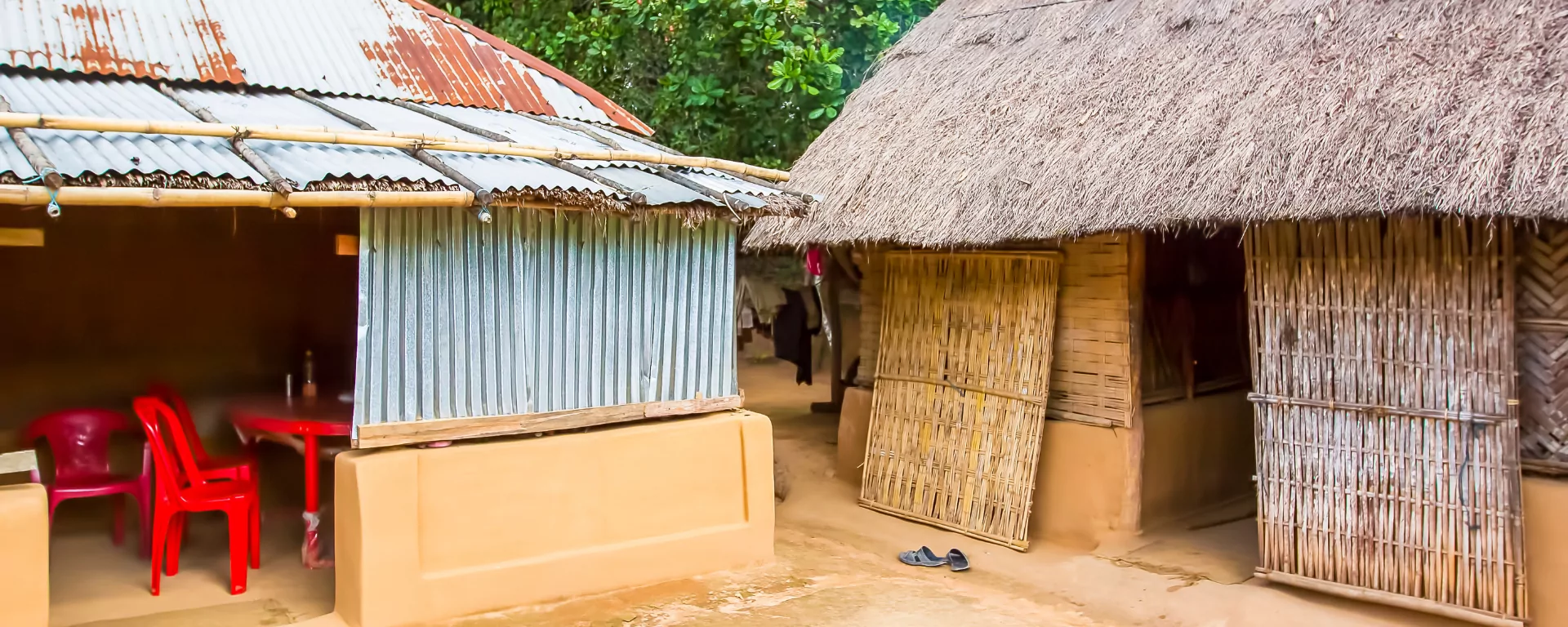
From recent walks.
These keep the day good for everyone, you and your hosts.
Send us your dates and where you’ll be (Mussoorie or Rishikesh). We’ll either fold the walk into a Pahadi House stay, or set it up on its own.
 Mountain Stays
Stargazing Nights
Pahadi Cuisine
Sunrise Treks
Eco Camping
Forest Walks
Riverside Retreats
Slow Travel
Mountain Stays
Stargazing Nights
Pahadi Cuisine
Sunrise Treks
Eco Camping
Forest Walks
Riverside Retreats
Slow Travel
Mountain Stays
Stargazing Nights
Pahadi Cuisine
Sunrise Treks
Eco Camping
Forest Walks
Riverside Retreats
Slow Travel
Mountain Stays
Stargazing Nights
Pahadi Cuisine
Sunrise Treks
Eco Camping
Forest Walks
Riverside Retreats
Slow Travel
Mountain Stays
Stargazing Nights
Pahadi Cuisine
Sunrise Treks
Eco Camping
Forest Walks
Riverside Retreats
Slow Travel
Mountain Stays
Stargazing Nights
Pahadi Cuisine
Sunrise Treks
Eco Camping
Forest Walks
Riverside Retreats
Slow Travel
Mountain Stays
Stargazing Nights
Pahadi Cuisine
Sunrise Treks
Eco Camping
Forest Walks
Riverside Retreats
Slow Travel
Mountain Stays
Stargazing Nights
Pahadi Cuisine
Sunrise Treks
Eco Camping
Forest Walks
Riverside Retreats
Slow Travel